

The Walking Liberty Half Dollar by Anthony Swiatek


Millyard Coins and Cards (MCC) Rating 4 Stars
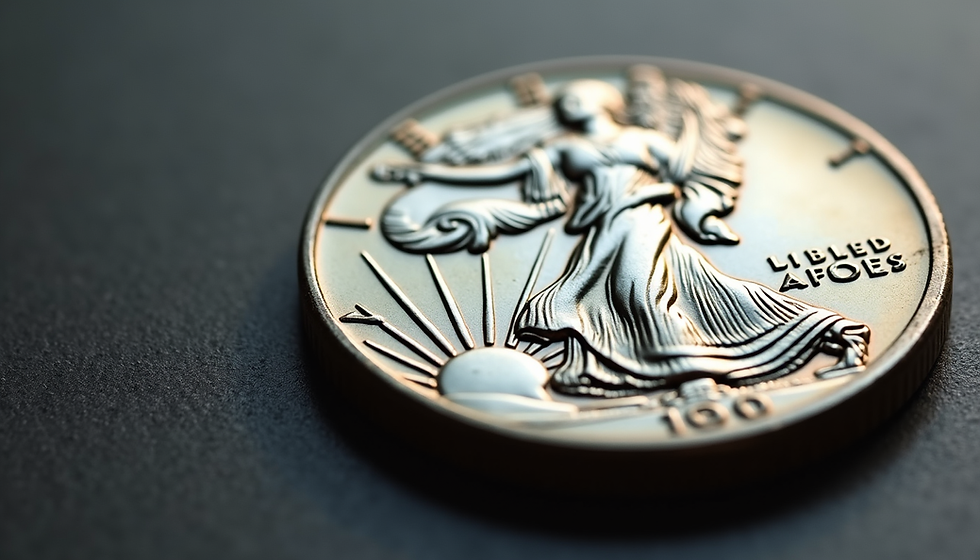
Photograph of 1941-S graded 66+ NGC
Anthony Swiatek’s The Walking Liberty Half Dollar is a compact but highly practical reference for collectors of one of America’s most admired coin series. First issued in the early 1980s and later reprinted, the 72-page volume focuses on the essentials: value determination, striking characteristics, grading, proof issues, investing considerations, and a year-by-year analysis of the series. Its emphasis on clarity and usable detail makes it especially appealing to readers who want a focused guide rather than an oversized general encyclopedia.
The book’s greatest strength is its specialization. Swiatek does not treat the Walking Liberty half dollar as a side topic; he gives the series sustained attention, which is exactly what serious collectors want. That focus is especially useful when considering the popular 1941 to 1947 “short set,” the late-series run of twenty circulation strikes that offers collectors a more attainable way to enjoy the design without confronting the major rarities of the earlier years. Within that short set, the 1941-S is commonly treated as the key date: not because it is a classic rarity in the context of the full 1916-1947 series, but because album collecting and market practice elevated it into the pivotal coin for this subset, and because San Francisco pieces are often hindered by soft strikes. With a mintage of 8,098,000, the 1941-S is available in lower Mint State grades, but it becomes notably difficult in sharply struck, high-grade preservation, which is why it often defines the quality ceiling and cost of a serious short-set collection. Swiatek’s discussion of strike quality and grading is therefore particularly valuable, since on coins like the 1941-S, surface preservation alone is not enough; collectors also have to judge the strength of Liberty’s hand, head, skirt lines, and the eagle’s breast and leg feathers. In that sense, the short set is not merely an easier collecting shortcut, but a specialized study in condition, strike, and eye appeal, and the book helps readers understand exactly why one date—especially the 1941-S San Francisco issue—can anchor the entire late-date run.
Ultimately, The Walking Liberty Half Dollar succeeds because it meets the needs of the collector at exactly the point where broad enthusiasm must give way to careful judgment. For readers drawn to the 1941 to 1947 short set, that strength is decisive: the book explains why the 1941-S is not merely another late-date issue, but the coin that tests a collector’s understanding of strike, grade, and true quality. As a result, Swiatek’s guide remains more than a compact reference—it is a disciplined and still worthwhile study of how this beautiful series should be collected.

Comments