

Walking Liberty Half Dollars A Numismatic Legacy

Updated: May 25
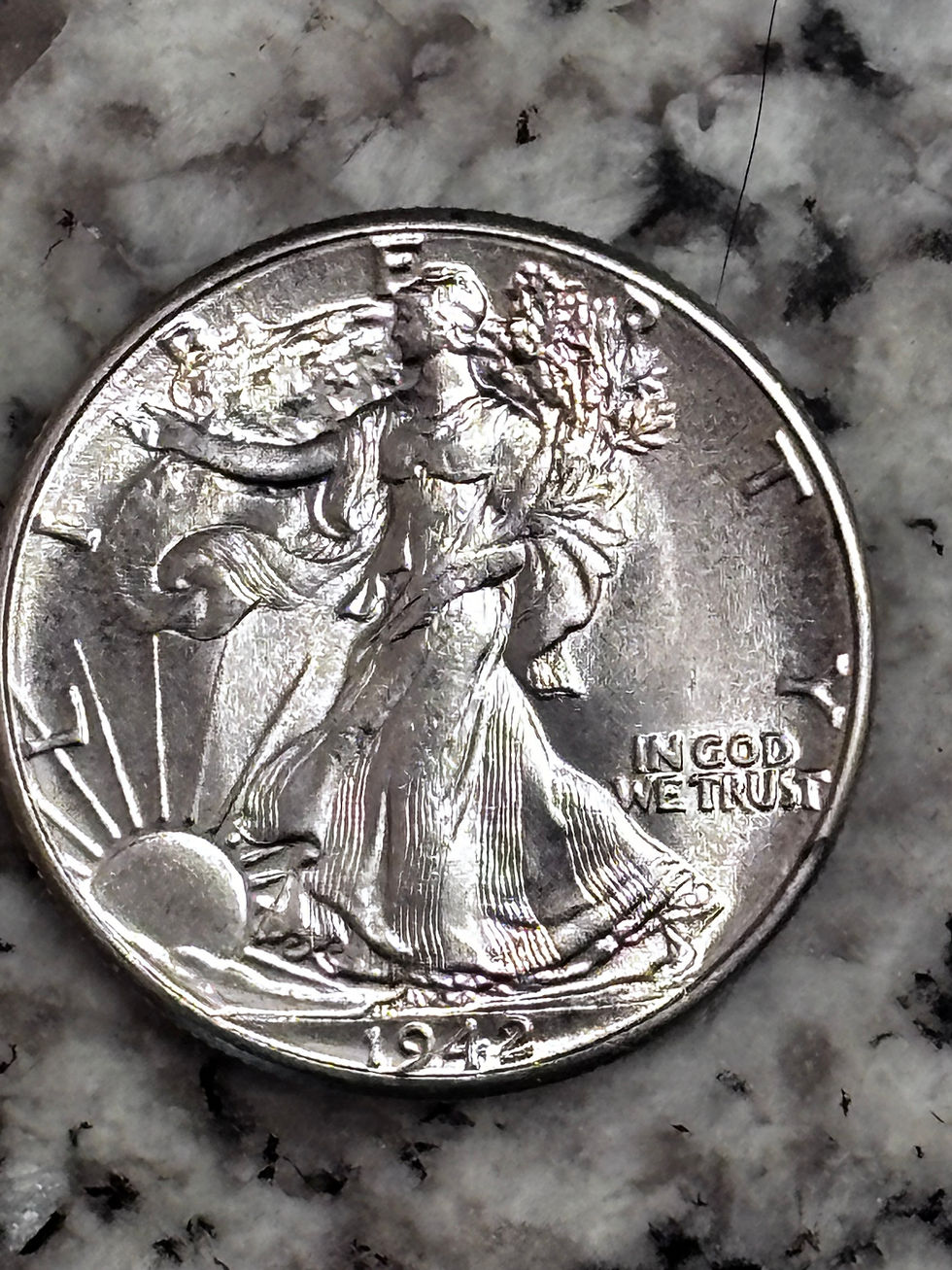
The Complete History, Specifications, and Collector Insights
Introduction
The Walking Liberty Half Dollar stands as an enduring emblem of American artistry and historical significance within the world of numismatics. Minted from 1916 to 1947, its innovative design and storied past have made it a centerpiece for collectors and historians alike. The coin’s continuing influence is evident today, most notably through its iconic Walking Liberty design gracing the American Silver Eagle bullion coin since 1986. This article provides an exhaustive account of the Walking Liberty Half Dollar, its specifications, production challenges, and ongoing legacy, offering valuable insights for both seasoned numismatists and those new to the hobby.
History of the Walking Liberty Half Dollar
The genesis of the Walking Liberty Half Dollar occurred in a pivotal era at the United States Mint, as part of a broader initiative to infuse American coinage with renewed artistic integrity. Introduced in 1916 to replace the Barber Half Dollar, the Walking Liberty design was selected for its forward-looking symbolism and aesthetic grandeur. Its obverse depicts Liberty striding confidently toward the sunrise, draped in the American flag, an allegory for national progress and optimism during tumultuous times. The reverse features a powerful eagle perched on a mountain pine, embodying resilience and freedom.
The coin’s production, spanning from 1916 to 1947, witnessed both World Wars and the Great Depression, amplifying its importance as a symbol of hope and endurance. Despite its popularity, the Mint faced ongoing difficulties in achieving uniform strike quality, particularly due to the high-relief design, which posed technical challenges throughout its three-decade mintage.
Specifications of the Walking Liberty Half Dollar
Designer: Adolph A. Weinman
Years of Issue: 1916–1947
Composition: 90% silver, 10% copper
Actual Silver Weight: 0.3617 troy ounces (11.25 grams)
Total Weight: 12.50 grams
Diameter: 30.6 mm
Edge: Reeded
Mintmarks: Philadelphia (no mark), Denver (D), San Francisco (S)
Production Challenges and Quality Issues
The Walking Liberty Half Dollar’s high-relief design, while visually stunning, repeatedly strained the technical capabilities of the United States Mint. On numerous occasions, efforts were made to improve strike quality, but these attempts seldom yielded consistent results. Most issues and mint locations feature notable “soft strikes” on the obverse, especially on Liberty’s left hand and the branches she carries, which frequently appear flat and lack detail. On the reverse, weak strikes are often observed on the feathers of the eagle’s left leg and the upper breast area near the wing junction. The inherent production challenges add a unique dimension to collecting, as coins with sharp, fully struck details are prized and comparatively rare.
Collecting the Walking Liberty Half Dollar
For collectors, the Walking Liberty Half Dollar embodies both artistic excellence and the thrill of discovery. The coin’s historical context, coupled with the challenges of finding high-quality examples, creates an engaging pursuit. With a wide array of dates, mintmarks, and variations, each specimen presents its own story and appeal. The scarcity of well-struck coins in certain years and mints rewards attentive collectors and makes completion of a high-grade set a distinguished accomplishment.
Tips for Collectors
Examine Liberty’s left hand and the branch for clear, well-defined detail; these are common areas for weak strikes.
Inspect the eagle’s left leg feathers and upper breast for sharpness on the reverse, as these frequently suffer from flatness.
Favor coins from years and mints known for strong strikes, such as the 1938–1942 Philadelphia issues, for optimal quality.
When possible, select coins graded by reputable third-party services, ensuring authenticity and accurate assessment of condition.
Study auction records and price guides to understand which dates are most desirable and scarce in high grades.
Consider assembling a type set or pursuing a complete series by date and mintmark for a rewarding challenge.
The Legacy Continues: Walking Liberty on the American Silver Eagle
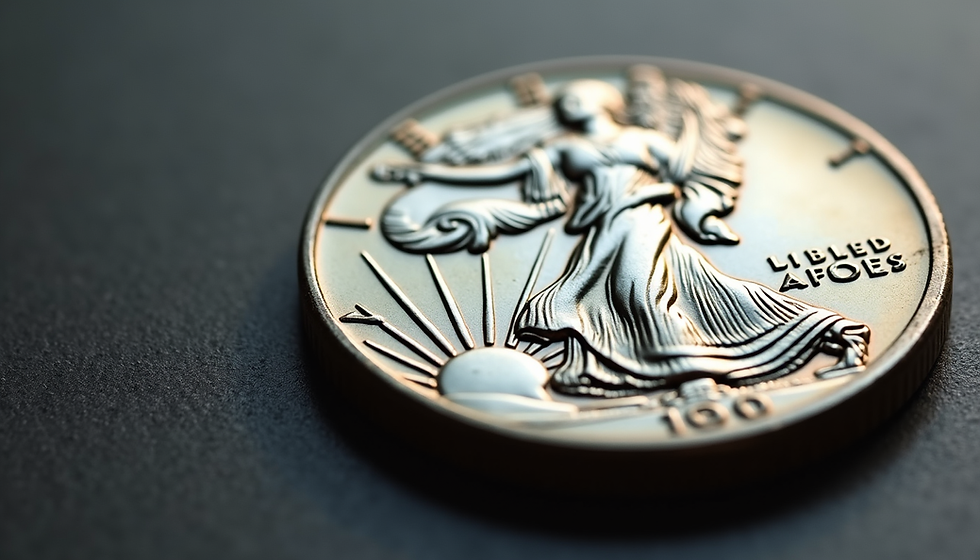
The influence of the Walking Liberty design did not end with the cessation of half dollar production in 1947. In 1986, the United States Mint revived Weinman’s iconic artwork for the American Silver Eagle, the official bullion coin of the United States. The American Silver Eagle features the classic Walking Liberty on its obverse, maintaining the spirit and beauty of Weinman’s original design. However, the reverse of the Silver Eagle was reimagined, initially featuring a heraldic eagle designed by John Mercanti, symbolizing strength and American heritage. This heraldic eagle remained on the reverse from 1986 until 2021, when a new eagle design was introduced. The American Silver Eagle’s enduring popularity stems not only from its precious metal content but also from the timeless Walking Liberty design, which continues to captivate new generations of collectors and investors.
Biography of Adolph A. Weinman and Influence of Augustus Saint-Gaudens
Adolph Alexander Weinman, born in Germany in 1870, immigrated to the United States as a child and quickly became immersed in the world of art and sculpture. His talent was recognized early, and he studied under Augustus Saint-Gaudens, one of America’s most revered sculptors and medalists. Under Saint-Gaudens’ mentorship, Weinman honed his skills and developed a keen appreciation for classical forms and high-relief techniques.
Weinman’s prolific career included the creation of numerous public monuments and architectural sculptures, but his contributions to American coinage remain his most celebrated works. Besides the Walking Liberty Half Dollar, he designed the Mercury Dime, another coin lauded for its artistry. Through his mastery, Weinman left an indelible mark on the nation’s visual heritage, and his legacy perpetuates through the continued use of his design on the American Silver Eagle.
Conclusion
The Walking Liberty Half Dollar represents a pinnacle of numismatic achievement, blending artistic brilliance, historical resonance, and collecting challenge. Its production history, the enduring quest for well-struck specimens, and its ongoing legacy on the American Silver Eagle illuminate the depth and vitality of American coin collecting. For enthusiasts, each coin is more than currency—it is a testament to innovation, perseverance, and the spirit of Liberty itself. As you pursue your own Walking Liberty treasures, may the wisdom of Adolph A. Weinman and the enduring beauty of his work inspire your numismatic journey.

Comments